Product Design
& Confirmation
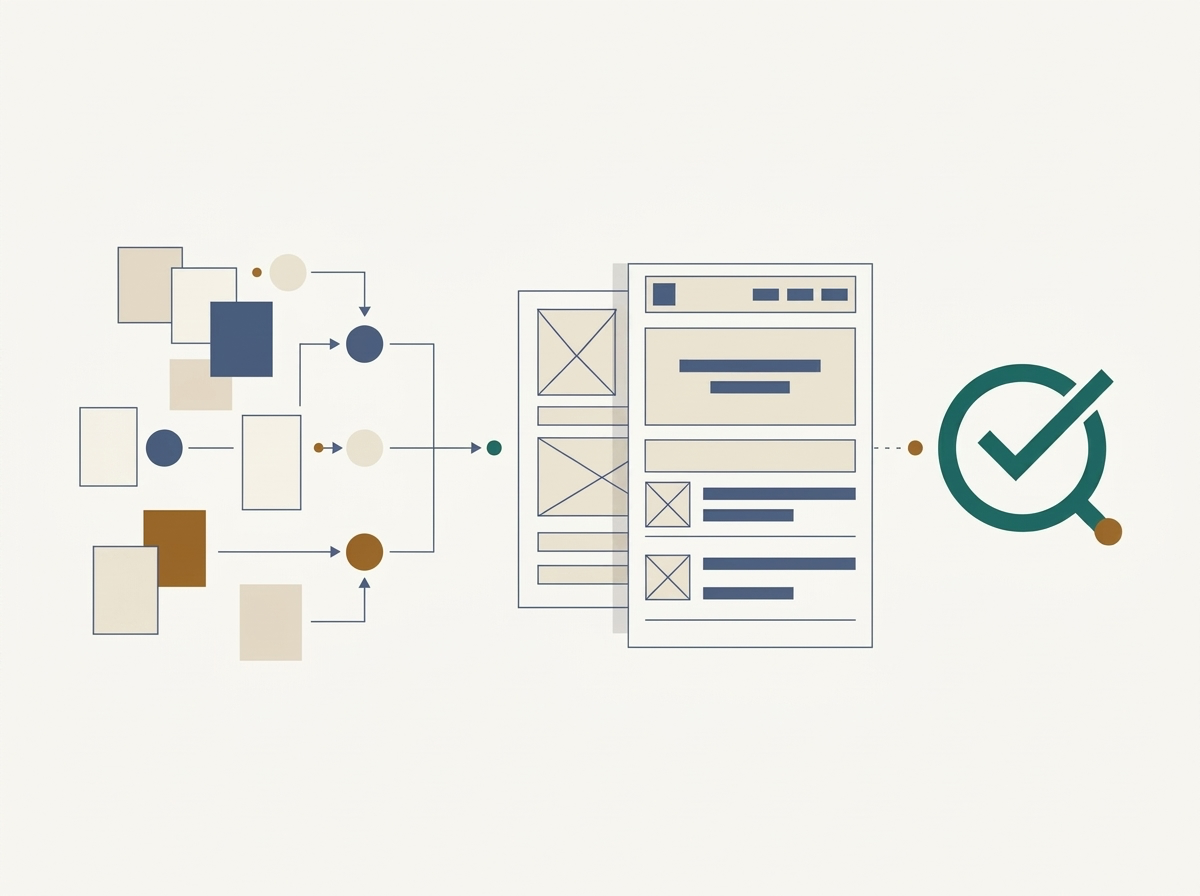
By the end of this lecture, you will be able to:
Story to Flow & Wireframe
Transform a User Story and Acceptance Criteria into a User Flow covering both happy and recovery paths, plus a low-fidelity Wireframe.
Separate Design Views
Distinguish User Experience (UX), User Interface (UI) and Technical Architecture decisions by the engineering questions each answers.
Evaluate Inclusive Quality
Audit an interface using usability, WCAG 2.2 accessibility, Privacy by Design (Data Minimisation) and error-prevention criteria.
Define Neutral Confirmation
Design a confirmation activity that gathers observable behaviour evidence from representative users without leading them.
Why do developers rebuild the same screen three times?
Text description
Top row (Anti-pattern): jumping straight from a 2-line Story to coding happy-path UI hides 404s, keyboard traps and extra fields until costly rework. Bottom row (Engineered): trace Story and Acceptance Criteria through Flow & 5 States, Inclusive Audit, and User Confirmation before coding.
Three engineering views: UX, UI, and Technical Architecture
User Flow
Answers: What steps, decisions and recovery paths does the user take?
Low-Fi Wireframe
Answers: What labels, controls and hierarchy appear on each screen?
Technical Architecture
Answers: How do client, API endpoints and database enforce state?
Match each design artefact to the question it answers
| Artefact | Plain-Language Anchor | Engineering Question Answered |
|---|---|---|
| User Flow | Step-by-step path through screens and decisions to finish one task. | Where can the user go next, and how do they recover on error? |
| Information Architecture | How content, navigation and data fields are grouped and named. | Do labels and menu groupings match how users think? |
| Wireframe | Rough structural blueprint without colours, fonts or styling. | Are controls, labels and hierarchy clear before styling? |
| Prototype | Clickable mock-up used to test a flow with users before full coding. | Can a representative user complete the task without hints? |
| Technical Architecture | System components, API contracts and data persistence boundaries. | Which service owns state, validation and concurrency? |
Campus Room-Booking Cancellation: simple story, hidden complexity
"As a student, I want to cancel an upcoming study-room booking so that the slot is released and I avoid a no-show penalty."
View & Initiate
User views upcoming bookings and triggers cancellation for a selected slot.
Late-Cancel Warning
System warns the user before confirming if start time is within 2 hours.
Stale Session Handling
System handles bookings already cancelled (404) or past cut-off (409) cleanly.
Map both the happy path and backend recovery paths
Text description
User starts at Bookings List and clicks Cancel. If under 2 hours, a late-cancellation warning appears before confirming. On DELETE /booking, 200 OK shows Success and updates the list; 404 or 409 shows a clear Error message with a Refresh List recovery action.
404 because another tab already cancelled the slot, what must the UI offer? → Clear explanation + Refresh action.
Five Interaction States every front-end screen must handle
First-time user or after last slot is cancelled.
Disable repeat clicks while awaiting API response.
Explicit confirmation banner + updated list.
Prevents accidental loss before destructive action.
Human-readable cause + clear recovery button.
Spot four engineering defects in this weak cancellation wireframe
Build contrast, persistent labels, keyboard focus, and Data Minimisation in before coding
1. WCAG 2.2 Contrast & Labels
Dark ink (#14171A) meets AA/AAA contrast. A persistent <label> stays visible during input and exposes an accessible name to screen readers.
2. Data Minimisation (Privacy by Design)
Only collect what the task requires. Authenticated session already identifies the student; phone and address are removed.
3. Keyboard Path & Error Prevention
Use native <button> with a visible focus ring, plus a confirmation step before irreversible cancellation.
Design Confirmation is not Design Approval
Text description
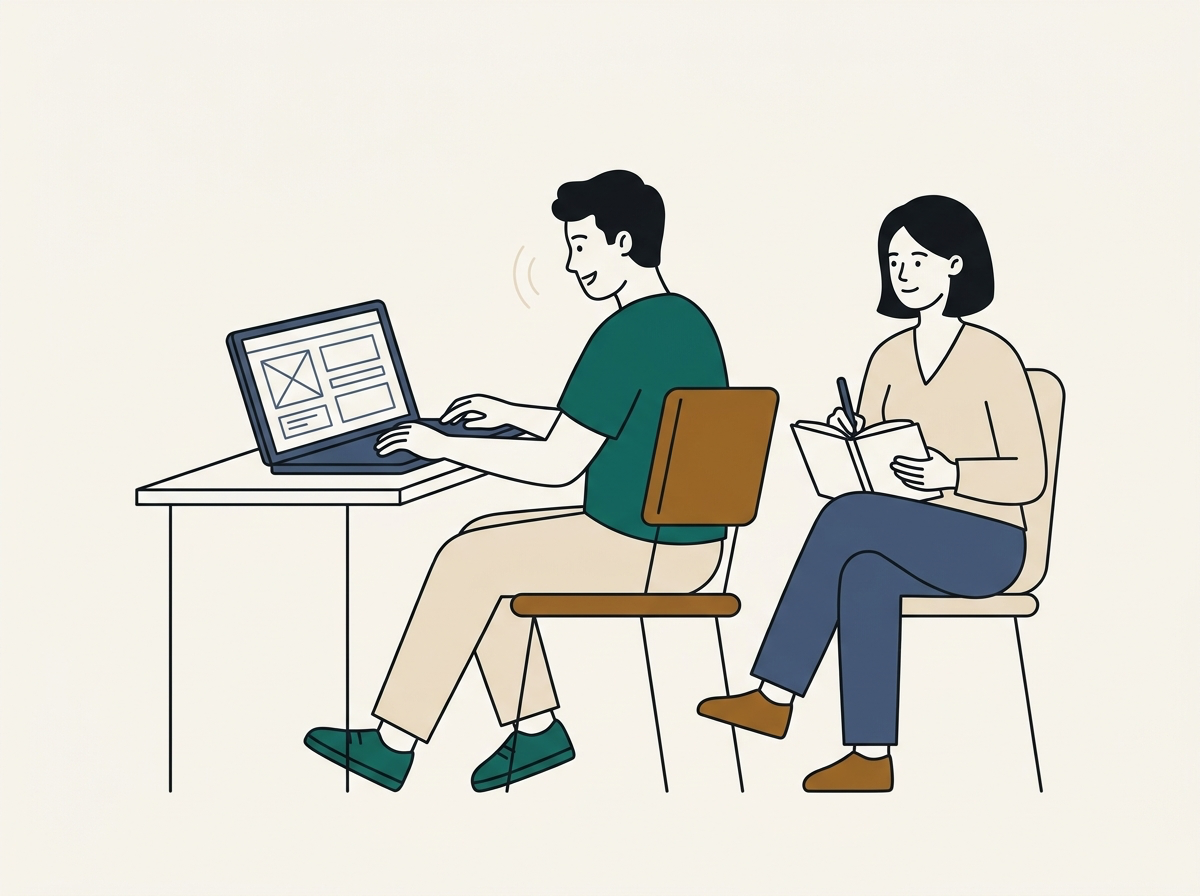
Design Approval is an authority decision by a Product Owner, tutor or teammates who already know the flow. Design Confirmation gathers empirical behaviour evidence from representative users completing realistic tasks without hints.
Use neutral Think-Aloud tasks, never leading questions
"Do you find this cancellation screen easy to use? Would you click the red button?"
Triggers polite agreement and reveals the intended path.
"Your plans changed for today's 14:00 room booking in B204. Show me what you would do next, and say aloud what you expect at each step."
1. Task completion (yes/no) · 2. Misclicks & error recovery · 3. Points of hesitation or confusion
Every design element and test traces back to a Story
Text description
Four-stage traceability chain: 1. User Story and Acceptance Criteria feed into 2. User Flow (happy and recovery paths), which shapes 3. Wireframe with 5 Interaction States, WCAG 2.2 and Data Minimisation, verified by 4. Confirmation Log with neutral task observations.
Four takeaways and one final check
User Flow, Wireframe and Technical Architecture answer different engineering questions. Do not swap one for another.
Every story needs happy and recovery paths covering empty, loading, success, warning and error.
Contrast, persistent <label>, keyboard Tab access, Data Minimisation and confirmation belong before coding.
Confirm designs through neutral Think-Aloud tasks with representative users, not teammate opinion polls.
In one sentence, what is the difference between Design Approval and Design Confirmation?
Week 9 Seminar Task & Week 10 Preview
Build Your Design Confirmation Pack
Pick one high-value User Story from your team's Product Backlog and produce:
- • User Flow: happy path + at least one failure/recovery path
- • Wireframe: low-fidelity layout with 5 Interaction States
- • Inclusive Annotations: WCAG 2.2 + Data Minimisation
- • Confirmation Protocol: 1 neutral Think-Aloud task
Layered Testing & Quality Strategy
Next week, we take your Acceptance Criteria, interaction states and design decisions and convert them into a layered testing and quality strategy before full implementation.
Artistic drawing skill and commercial tool mastery are explicitly not assessed.